We didn’t smell it before we saw it.
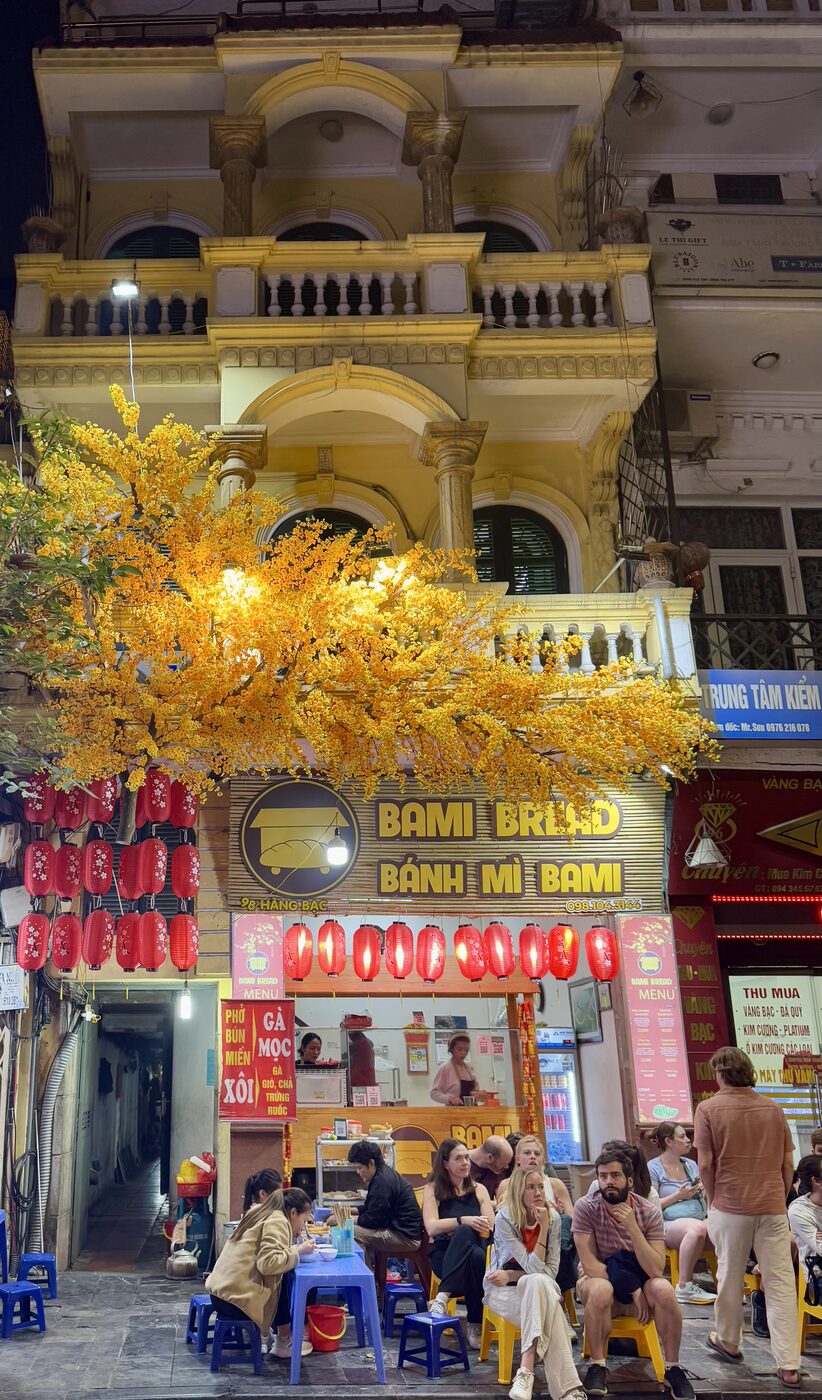
We turned the corner and the tree caught our eye from all the way down the street. Wide and yellow and impossible to miss, branches spreading out over the road like it had been there long before the buildings on either side. It stopped me mid-step. I still don’t know what kind it was, only that it gave the whole corner a quality the rest of the block didn’t have, something that made you slow down.
We hadn’t been looking for anything specific. Just hungry, just walking, letting the city pull us wherever it wanted. The street was already thick with motorbike exhaust and the heat Hanoi carries at dusk, and then underneath all of it: pork fat, charred bread, something green and fresh.
And below the tree: red lanterns, strung and glowing. Bold yellow letters on the sign: Bami Bread — Bánh Mì. And a crowd, locals and tourists shoulder to shoulder, nobody seeming to care which was which, perched on tiny plastic stools, yellow and blue, eating with the focused satisfaction of people who had made a good decision.
We got in line without discussing it.
That first visit, we just ate. Stood at the edge of it all, sandwiches in hand, watching. The shop was run by two women who moved the way people move when they’ve done something together ten thousand times: no wasted motion, no instructions, a kind of silent fluency. Bread split open with both hands. Pâté spread fast and sure. Herbs dropped in by the fistful, unmeasured, unhesitating. Orders called out, filled, handed off.
I’ve worked in restaurants most of my life. I know that rhythm. There’s a specific kind of pride in executing something simple so well, so fast, that it looks effortless. I recognized it immediately.
We came back the next day. And the day after that.
On our final visit they were slammed. The kitchen was moving at a pace that had no room for anything extra. We could see it from the street: the focused quiet of two people deep in the work.
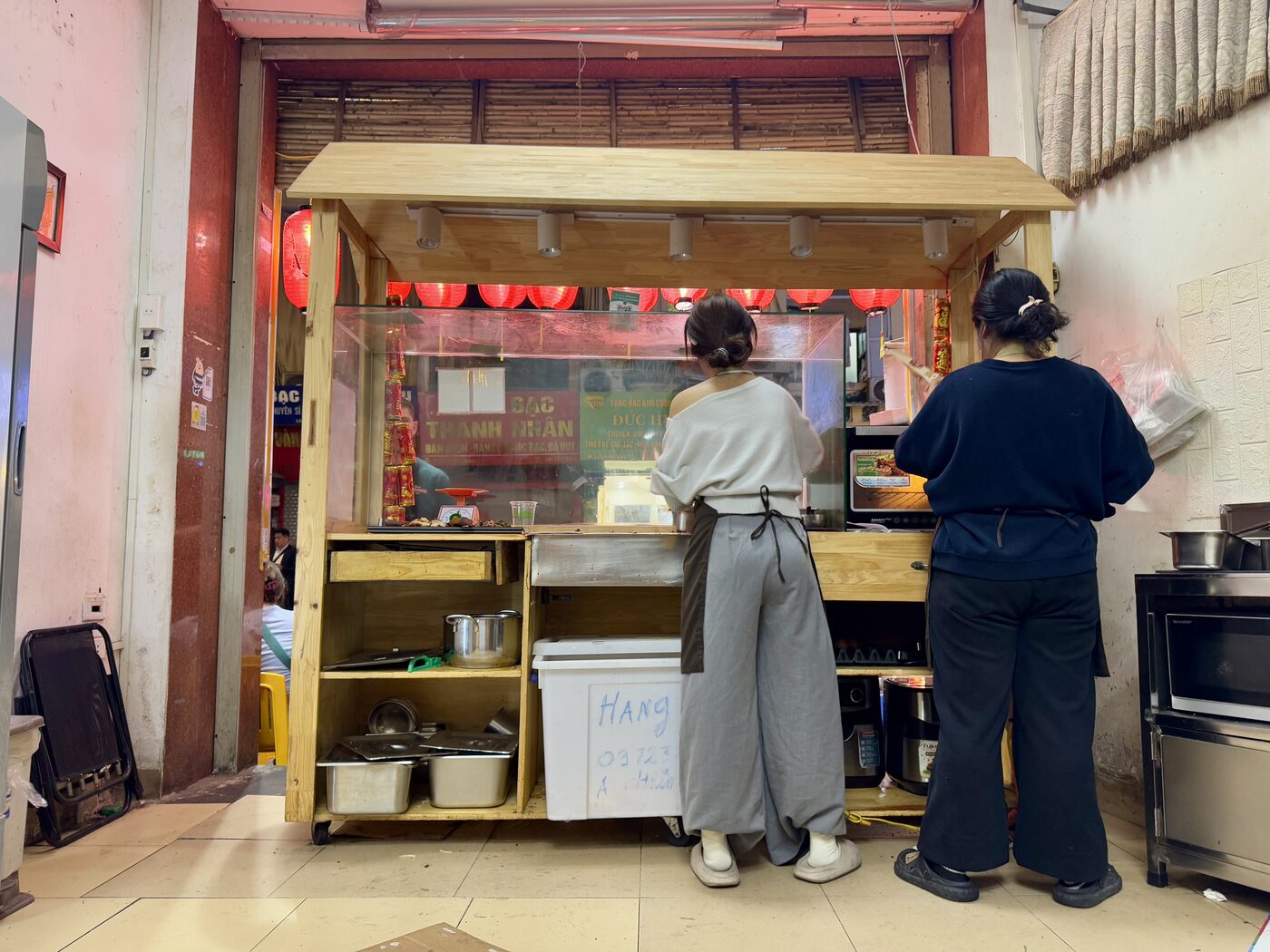
So we waited. One of the women looked up, caught my eye, smiled, and waved. She never stopped moving while she did it. She kept building the sandwich in her hands and took our order at the same time.
The place was packed. Not an empty stool anywhere. We paid, and before we’d worked out where we were going to wait for our food, she waved us around the counter.
No words. Just: come here.
So we did. They unstacked two extra yellow stools for us. Then one of them walked to the cooler and came back with two cold Bia Hà Nội, which we hadn’t asked for and hadn’t paid for.
Jesse and I folded ourselves onto those little plastic stools, tucked into the corner of the kitchen, knees almost at our chins. The cans were sweating before we got a grip on them. First sip: light, crisp, the exact temperature the moment called for.
And then we just watched.
The crack of bread splitting open. The quick, confident spread of pâté. Herbs tossed in without a second glance. The two of them moving around each other in a space barely big enough for two, communicating entirely in glances and small gestures and the kind of timing you can’t teach. Outside, the crowd noise: laughter, the clatter of stools, the low hum of Hanoi doing what Hanoi does. The red lanterns swaying slightly above it all. Inside: focused, alive, completely unhurried by the chaos six feet away.
We smiled at each other, me and Jesse, us and them, the way you smile when language isn’t necessary. When you’re just glad to be exactly where you are.
The sandwich, when it came, tasted the way it always had. But everything around it was different.
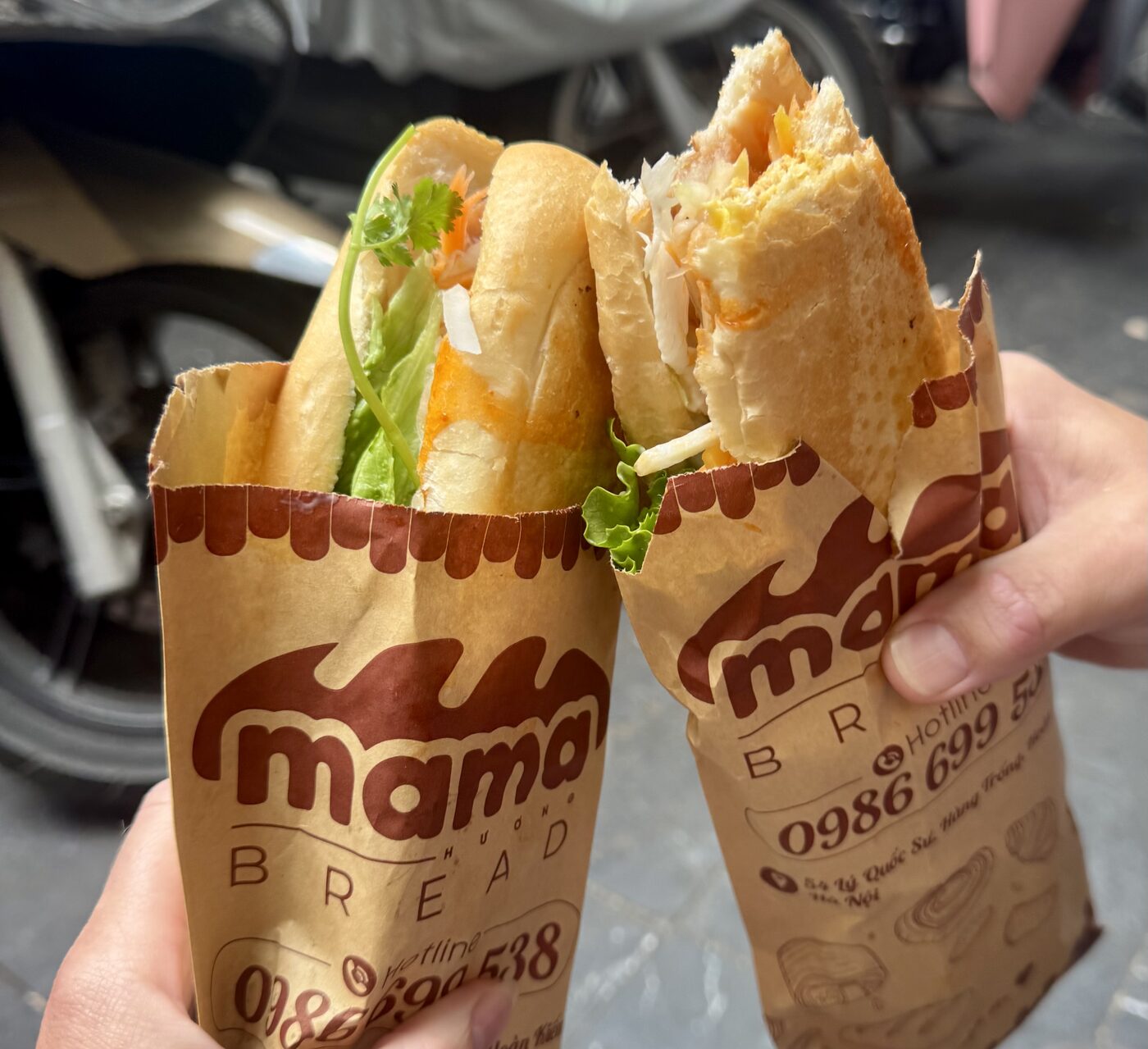
I’ve thought about that kitchen a lot since we left Hanoi.
Not because it was the best bánh mì we had, though it might have been, but because of how uncomplicated it felt to be there. Nobody was optimizing or cross-referencing reviews or wondering if the place two streets over was better. Just people, hungry, eating something made well, in the open air, under a yellow tree strung with red light.
I work in restaurants. I have spent years on the other side of counters like that one, in the heat and the rhythm, moving fast and quiet with people I didn’t always need words with. There is a belonging in that world that I don’t know how to explain to someone who hasn’t felt it. It lives in your hands and your feet, in the way your body knows where to be without being told.
In that kitchen in Hanoi, the version of me that knows what it means to be in the weeds, to take pride in the work, to earn your place at the counter, was recognized. By strangers, in a language neither of us spoke.
That’s not a small thing.
Back home, wherever home is that season, I notice how quickly I slip back into managing life instead of living it. Comparing. Structuring. Even lunch can start to feel like a problem to be solved correctly.
But on those stools, there was no correct. There was just the cold beer and the warm bread and Jesse next to me and two women who let us in without being asked.
I don’t want a bigger life.
I want a closer one.
Closer to the street, to the people in front of me, to the rhythm, instead of standing just outside it waiting to be let in.
Sometimes you just need someone to wave you around the counter.
Hanoi at that hour doesn’t ease you in. It just absorbs you.