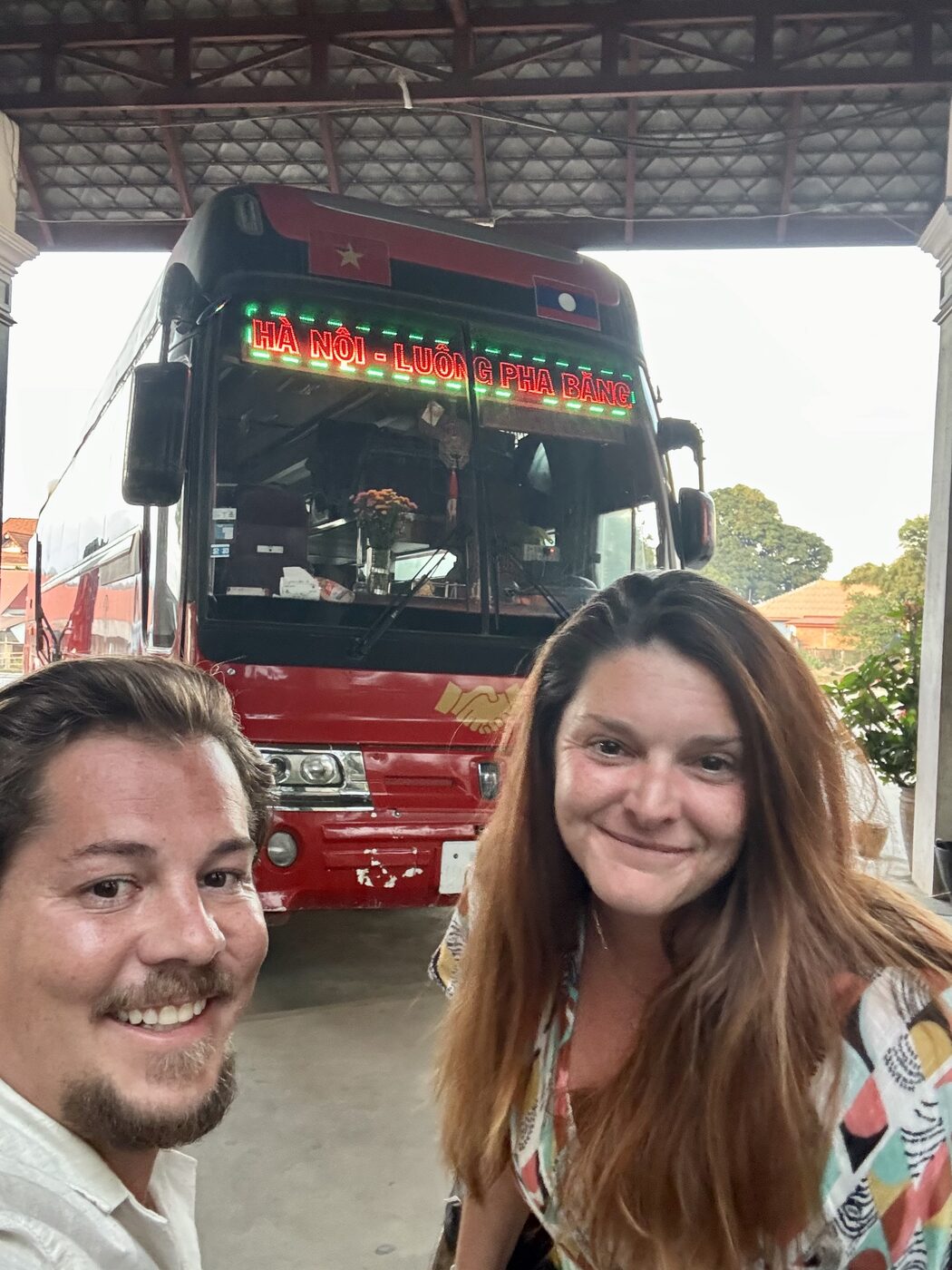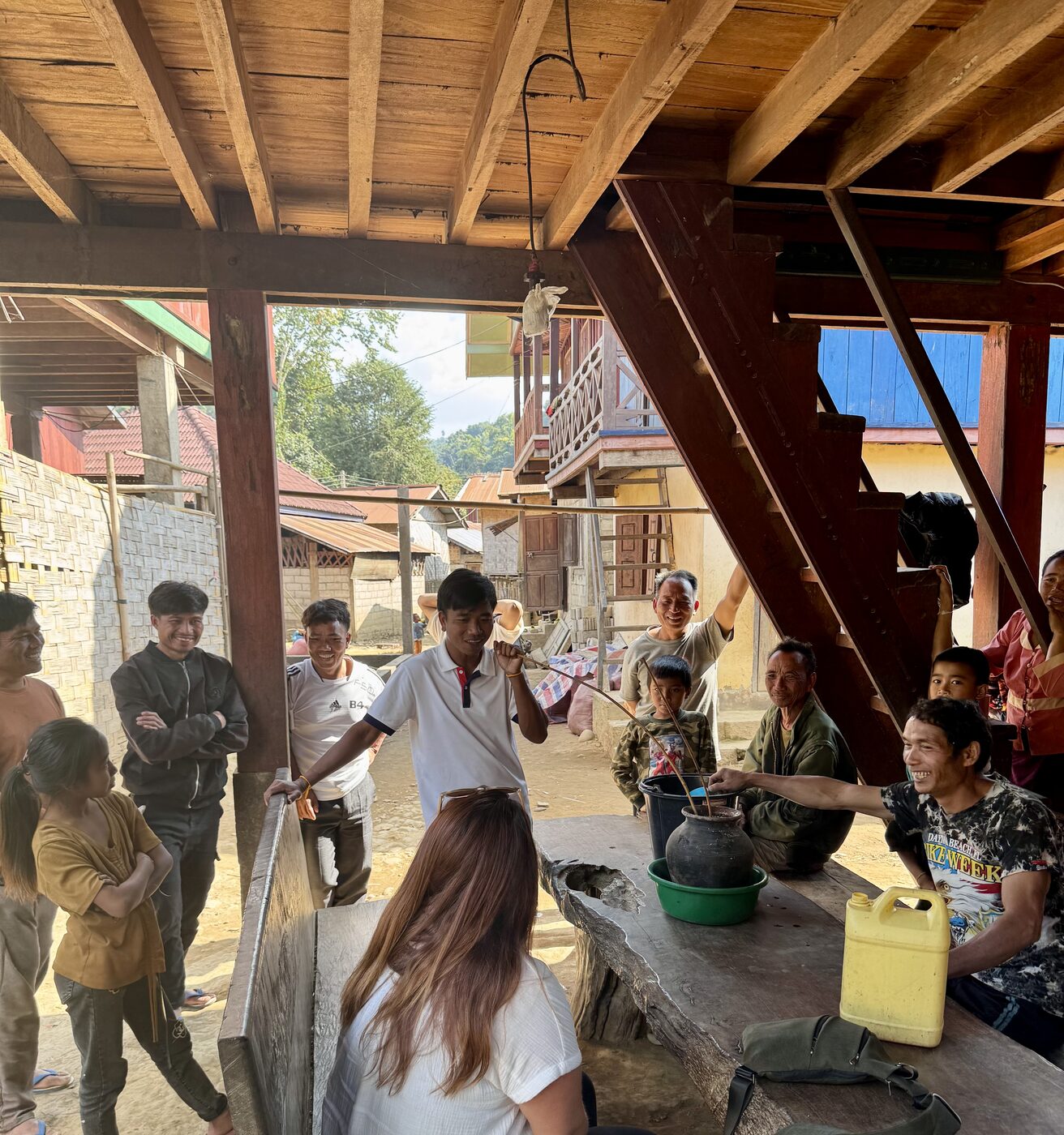
It’s easy to think travel is about geography. New landscapes, new languages, new food.
But over time, the places blur. What stays are the people.
What St. John taught Karlee first
Karlee learned this slowly, over five seasons on a small island in the Caribbean.
Island life compresses distance in a way that’s hard to explain until you’ve lived it. You see the same faces enough times that strangers become familiar. Community isn’t something you seek out there; it becomes part of your daily rhythm whether you choose it or not.
There’s a quality to the connection that forms in small places. It’s less curated than what you find in cities. People don’t have the same ability to self-sort into comfortable bubbles. You end up alongside people you wouldn’t have sought out, and you’re often better for it.
Those seasons left a mark. Not just in the friendships, but in the understanding that the texture of daily life in a place, the rhythms, the relationships, the unspoken rules, is always more interesting than any landmark.
Eight years of American road
Van life across forty-eight states is its own education in human variety.
The America you see from a highway is different from the one you encounter when you slow down: when you stay somewhere long enough to become a regular at the diner, when your van breaks down in a small town and three strangers stop to help before you’ve finished assessing the situation yourself.
We’ve been waved into driveways, fed by people who didn’t know our names, directed toward roads that weren’t on any map by people who wanted to make sure we didn’t miss something. Those moments don’t show up in travel guides. They’re the ones that actually shape you.
What the American road taught us, more than anything, is that generosity isn’t a function of wealth or geography. It exists on a dusty BLM pull-off in rural Nevada and on a quiet side street in a small Appalachian town with equal frequency. You just have to be moving slowly enough to receive it.
The birthday in Nusa Lembongan
On a small island off the coast of Bali, we spent a few days staying next to a local dive shop. Over those days, casual conversations formed, the kind that start with smiles and questions and curiosity on both sides.
One evening, they invited us over. We assumed it would be brief.
Instead, we walked into a birthday celebration. It was Pan’s birthday. Chairs were pulled up without hesitation. There was a whole table of food set out: fish they had caught that day, rice, homemade soup. Someone patiently showed us how to fold a leaf into a bowl, laughing gently as we attempted it.
We sat around that table for hours. We told stories, we laughed a lot, and we drank a lot of Bintang and the local homemade wine. We lost track of time completely.
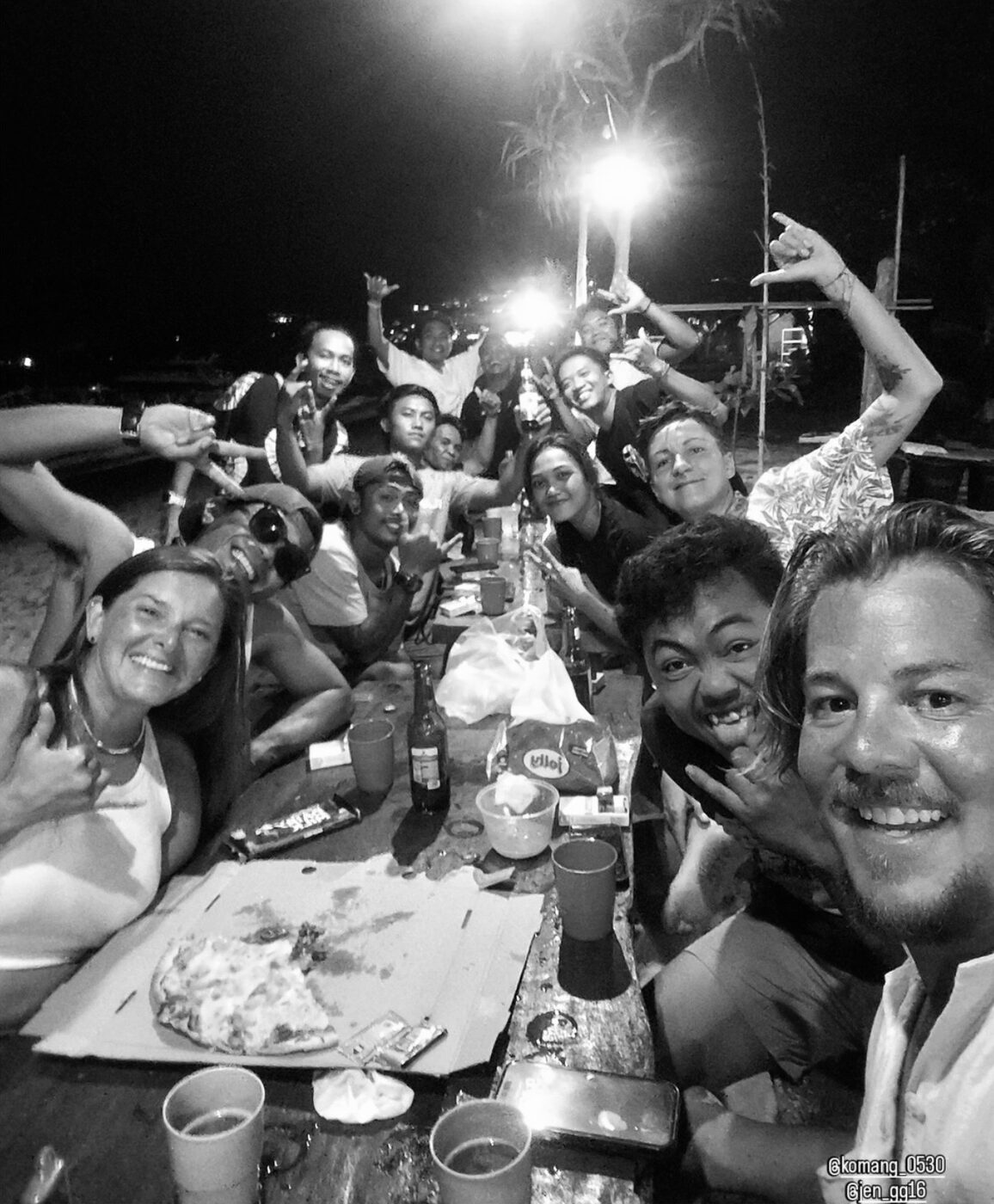
We didn’t share a long history or a fluent language. But warmth doesn’t require fluency.
There was no performance, no curated experience, no transaction. Just a group of friends widening their circle for the night.
What changes when you sit at someone else’s table
It’s harder to reduce a country to headlines when you’ve celebrated someone’s birthday in their backyard. Harder to generalize when you’ve shared fresh fish prepared by hands that work long days at a dive shop.
Travel doesn’t automatically make someone open-minded. But proximity can.
Sit long enough at someone else’s table and you start to notice things. Parents worry about their children everywhere. Friends tease each other the same way everywhere. People work hard, celebrate hard, and care deeply everywhere.
Different customs, same humanity.
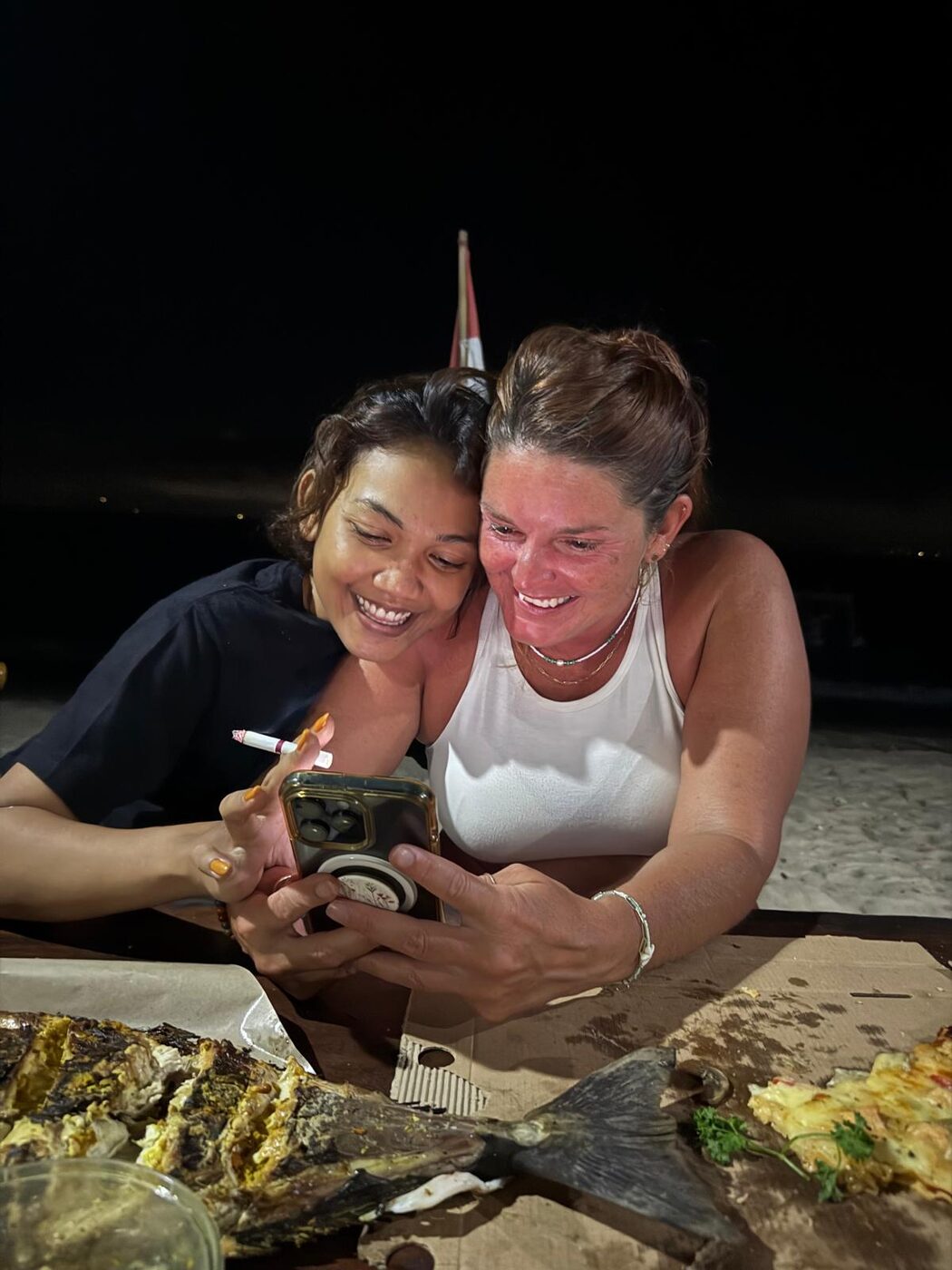
There’s also humility in being the outsider. You mispronounce names, misunderstand jokes, navigate small awkwardness. And that discomfort can be instructive. It softens certainty and reminds you that your way is not the default.
We left Lembongan with an open invitation to come back and dive with the guys. Karlee is still in touch with them. Whenever we make it back, we already know where we’re going first.
The world is not divided into ‘us’ and ’them.’ It’s divided into people who have met and people who haven’t yet.
What this taught us, practically
- Slow down enough to notice daily life; the ordinary reveals more than the extraordinary
- Stay long enough to have real conversations, not just exchanges
- Choose local spaces over curated ones whenever you can
- Learn a few words, even imperfectly; the attempt matters more than the accuracy
- Remember that you are a guest, and behave accordingly
- You can practice this in your own city; distance makes it easier to see, but it isn’t required
Some of the most meaningful moments in travel are not landmarks.
They’re tables, stools pulled up beside strangers, invitations that could easily not have been extended.
The miles matter. But the people in them matter more.