We talked about it for a year
We almost stayed home. Not just once, but for an entire year.
We started talking about traveling through Asia twelve months before we ever booked a ticket. It lived in conversation, in late-night “what if” scenarios, in shared notes and half-researched destinations. We would bring it up casually over dinner, during long drives, in the moments when routine felt a little too predictable.
But we didn’t book.
We were holding back, probably for more reasons than we admitted out loud. Money, timing, work, stability. The comfort of knowing exactly what next month would look like.
Dreaming felt safe. Committing felt different.
I reopened the same flight search more times than I can count. Checked prices. Closed the tab. Opened it again days later. We weren’t saying no, but we weren’t saying yes either.
Then one evening, after staring at the screen longer than necessary, we finally did it. We hit book.
Everything changed in that instant. The tightness, the financial fear, the what-if-something-goes-wrong thoughts didn’t disappear, but they turned into a growing ball of excitement that felt like it was expanding inside my chest. Not reckless excitement or blind optimism. Momentum.
For the first time in a year, we weren’t just talking about it. We were going.
The fear wasn’t the money
Before we booked, the numbers felt overwhelming. I remember staring at our savings and wondering if we were being irresponsible. I used to believe travel was reserved for people with flexible incomes and padded savings accounts — people who didn’t feel a knot in their stomach before clicking purchase.
But when we finally laid everything out, our savings, upcoming expenses, the exact cost of flights and accommodations, the fear became clearer. The problem wasn’t affordability so much as uncertainty.
So we replaced uncertainty with strategy. We tracked our expenses for a month and found small leaks we hadn’t noticed: subscriptions, extra meals out, impulse purchases that felt harmless at the time. We created a dedicated travel fund and contributed to it consistently. Watching it grow shifted our mindset from “maybe someday” to “this is happening.”
We compared flexible flight dates. We looked at regional accommodation pricing. A one-day shift in departure saved hundreds. A different neighborhood lowered costs without sacrificing experience.
Once we had a plan, the fear felt smaller. Not gone, just smaller than our desire to go.
The bus
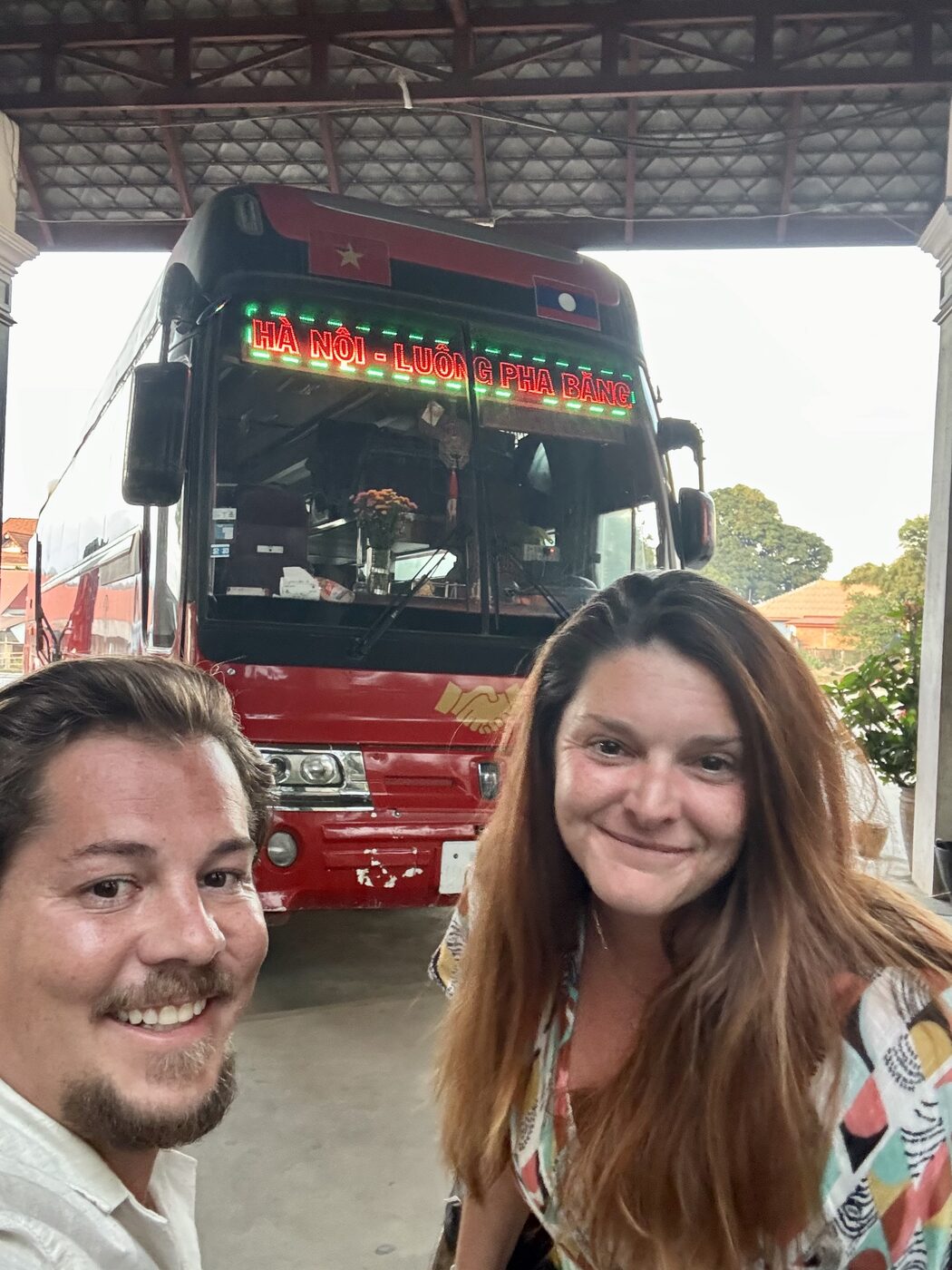
If I had to choose one moment that tested us on that trip, it wouldn’t be a beach or a temple or a perfect skyline. It would be a bus.
A 27-hour ride from Laos into Vietnam that felt less like transportation and more like endurance.
The first stretch ran deep into the night, narrow dirt roads carved into mountains. Endless hairpin turns. Massive potholes that launched us out of our seats. No guardrails, no streetlights. Just darkness and our headlights cutting a narrow path through the night for the first eight hours, the mountain swallowed in black and the road only visible where the light permitted it.
And no bathroom.
We had the two seats directly behind the driver, so we could see everything. Every blind curve, every steep drop, every stretch of road that looked more imagined than engineered.
The chairs were narrow and stiff, the kind that make your hips ache after an hour, let alone twenty-seven. We tried to sleep, but it was impossible. You could hear everything the drivers did: every gear shift, every press of the brakes, every acceleration before a climb. And underneath it all, the constant sound of the road. Gravel hitting metal, suspension straining, the dull thud of potholes.
There were five different drivers rotating throughout the journey. Five. And when all of them stepped forward at once to peer through the windshield at the upcoming stretch of road, you knew it wasn’t casual. It was serious.
At one point we hit a pothole so deep the entire bus gasped, me included. Luggage shifted. Someone muttered something under their breath.
We chose this.
Not in regret or panic. Just awareness.
The border at dawn
Sometime in the early morning hours, blurry and exhausted, we were told to grab everything: every backpack, every loose layer, every item shoved into overhead bins.
We stumbled off the bus alongside a full busload of equally exhausted travelers. Fluorescent lights buzzing overhead. Sleep-heavy eyes. Very little conversation.
The border was open when we arrived. We stood in line for security and customs, clutching passports, trying to look alert enough to answer questions clearly. Then we collected our luggage and physically walked across into a brand-new country.
Sleepy, disoriented, arriving somewhere new in the grey light of early morning.
On the other side, the same bus waited. We climbed back in, stiff, dehydrated, running on very little sleep, and kept going.
A year earlier, we were afraid to click “Book.” Now we were crossing borders at dawn, exhausted and uncomfortable, trusting strangers to carry us through terrain we couldn’t fully see.
And strangely, I felt calm.
Because this is what saying yes actually looks like. It isn’t polished or comfortable or predictable. But it’s real.
What it changed
| Before | After |
|---|---|
| We waited for perfect timing. | We understand timing becomes clear once you commit. |
| Travel felt financially risky. | Not living fully feels riskier. |
| We needed certainty. | We need intention and courage. |
That trip gave us more than stories. It changed how we approach decisions. We no longer wait for zero fear or expect complete clarity before acting. We plan strategically, and then we move.
Saying yes didn’t mean being reckless. It meant acknowledging fear, building a plan, adjusting priorities, and going anyway.
The first time we almost didn’t go, we chose yes. And that decision gave us more than a 27-hour mountain bus ride and a border crossing at dawn. It gave us proof.
Proof that fear shrinks when you face it, that preparation builds confidence, and that the uncomfortable parts are usually the ones that change you.
Now when hesitation shows up, we recognize it. It’s just the doorway.
Sometimes you can only see as far as your headlights allow. That’s enough to keep moving.
The world doesn’t open when everything is perfect. It opens when you go anyway.