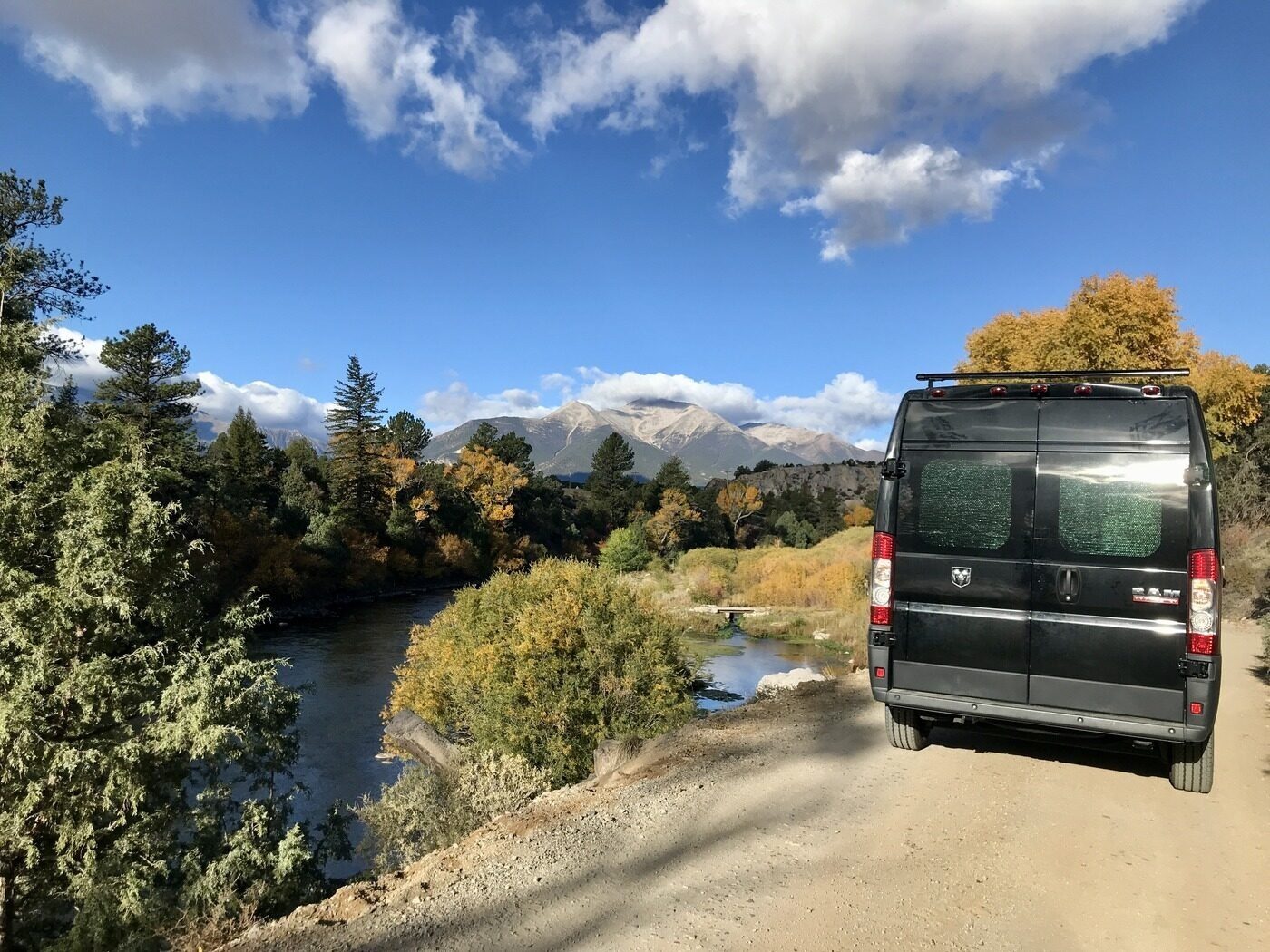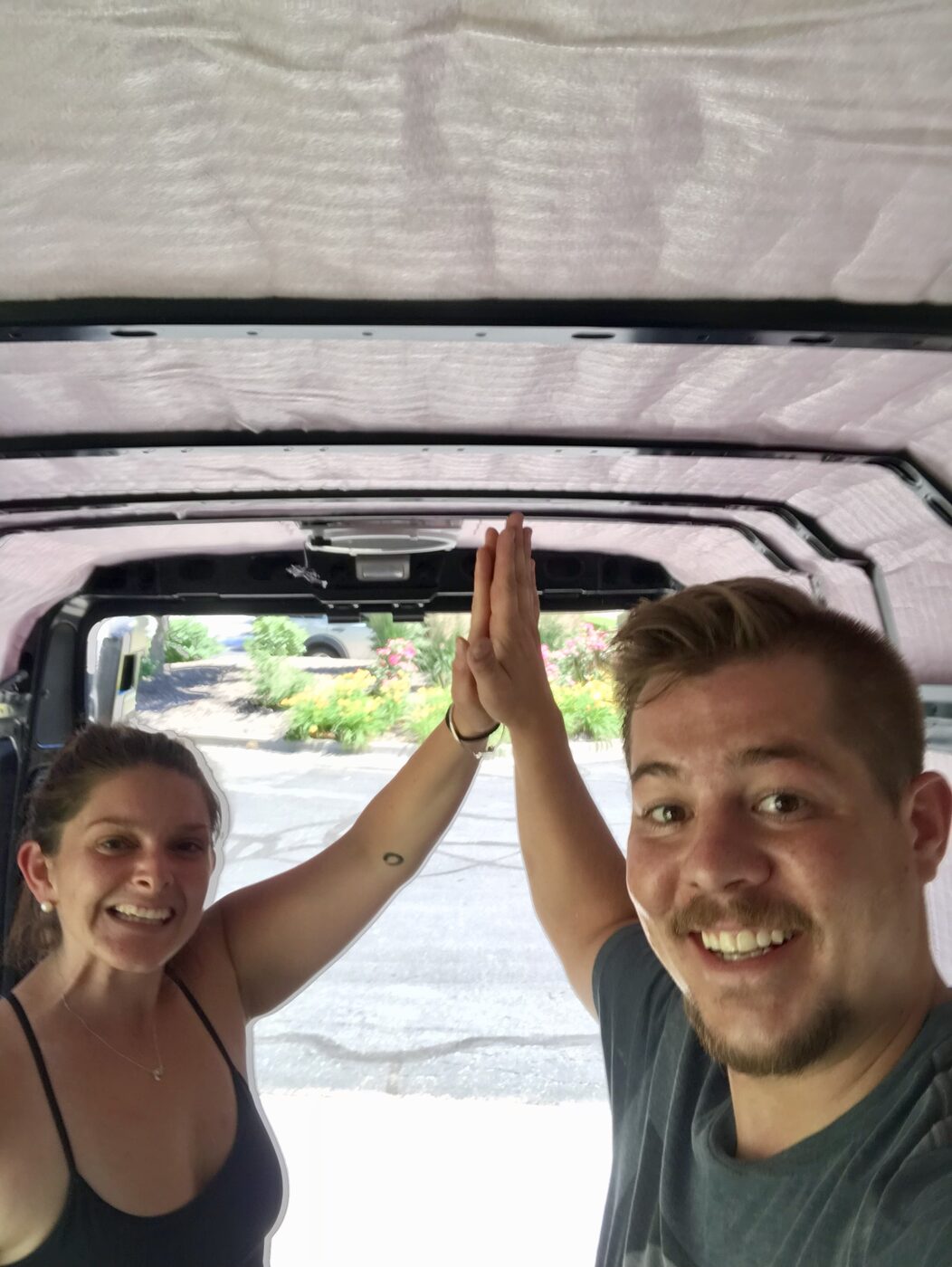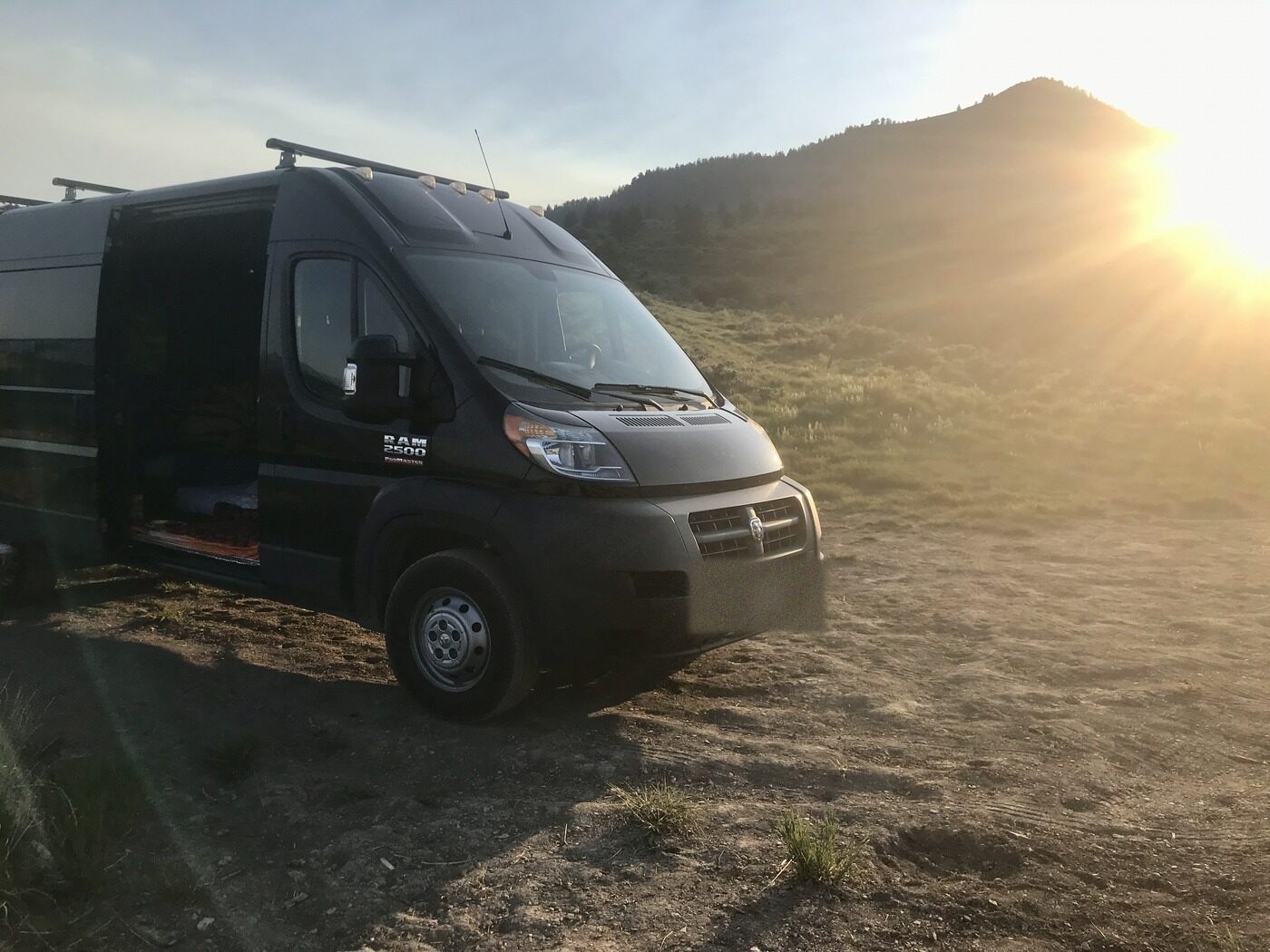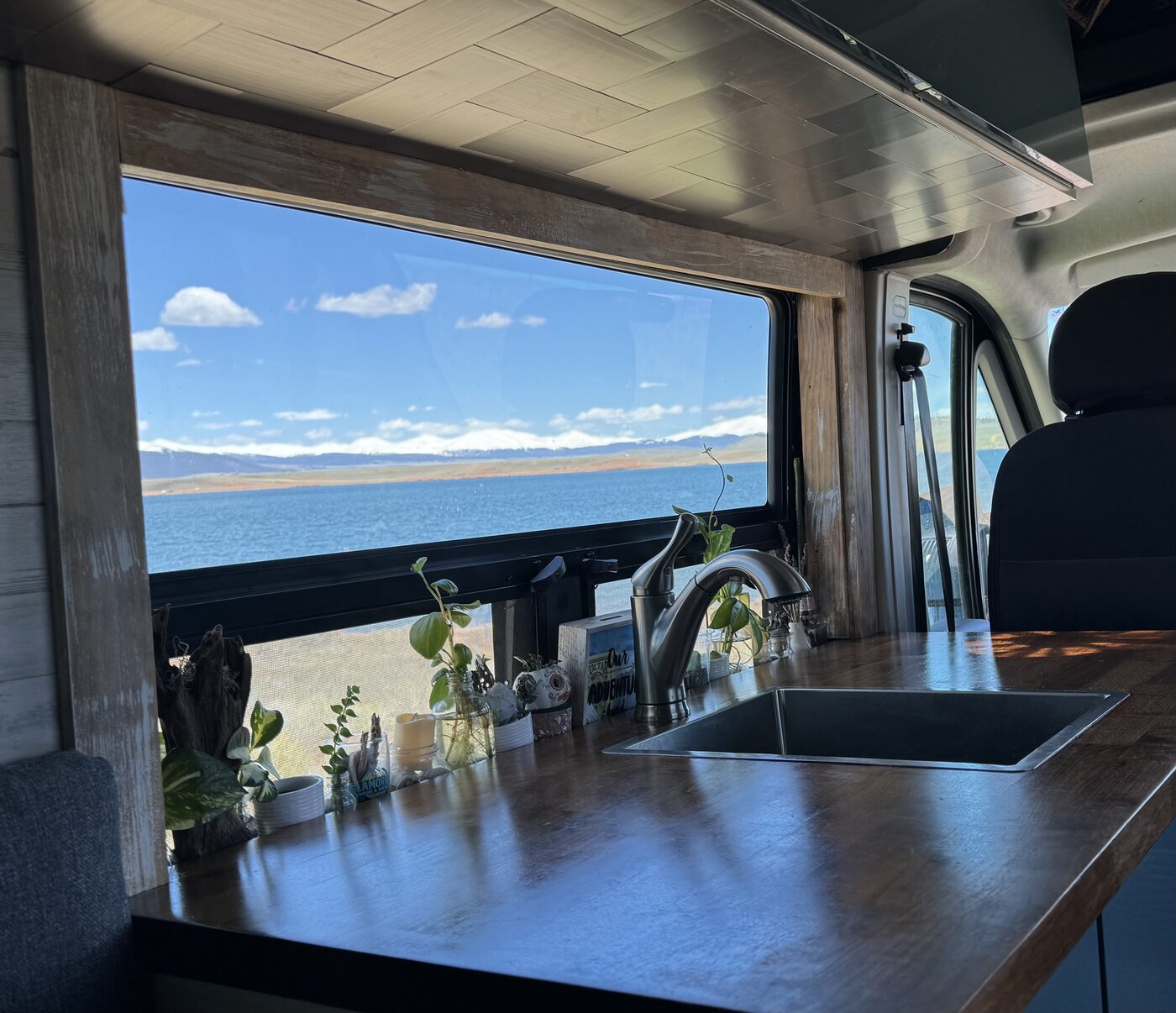
We didn’t set out to live sustainably. We set out to live freely. It turns out those two things have a lot more overlap than we expected.
Eight years in a van will do that to you. Not because you made a list of virtuous choices, but because the van makes a lot of choices for you. Space is finite. So are water and power. And somewhere along the way, living within those limits stops feeling like sacrifice and starts feeling like the most sane way to exist.
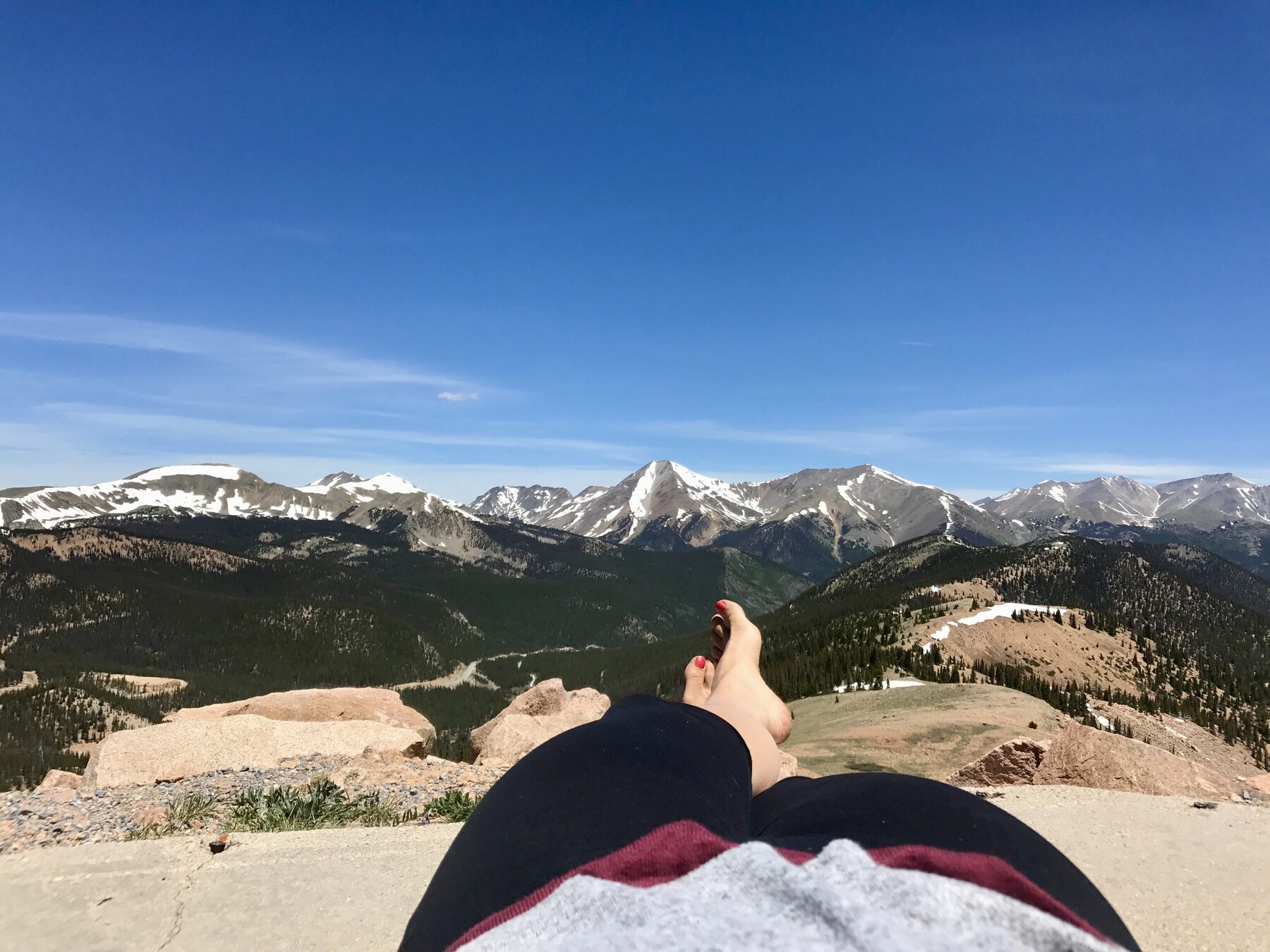
Let us show you what we mean.
What 70 square feet actually looks like
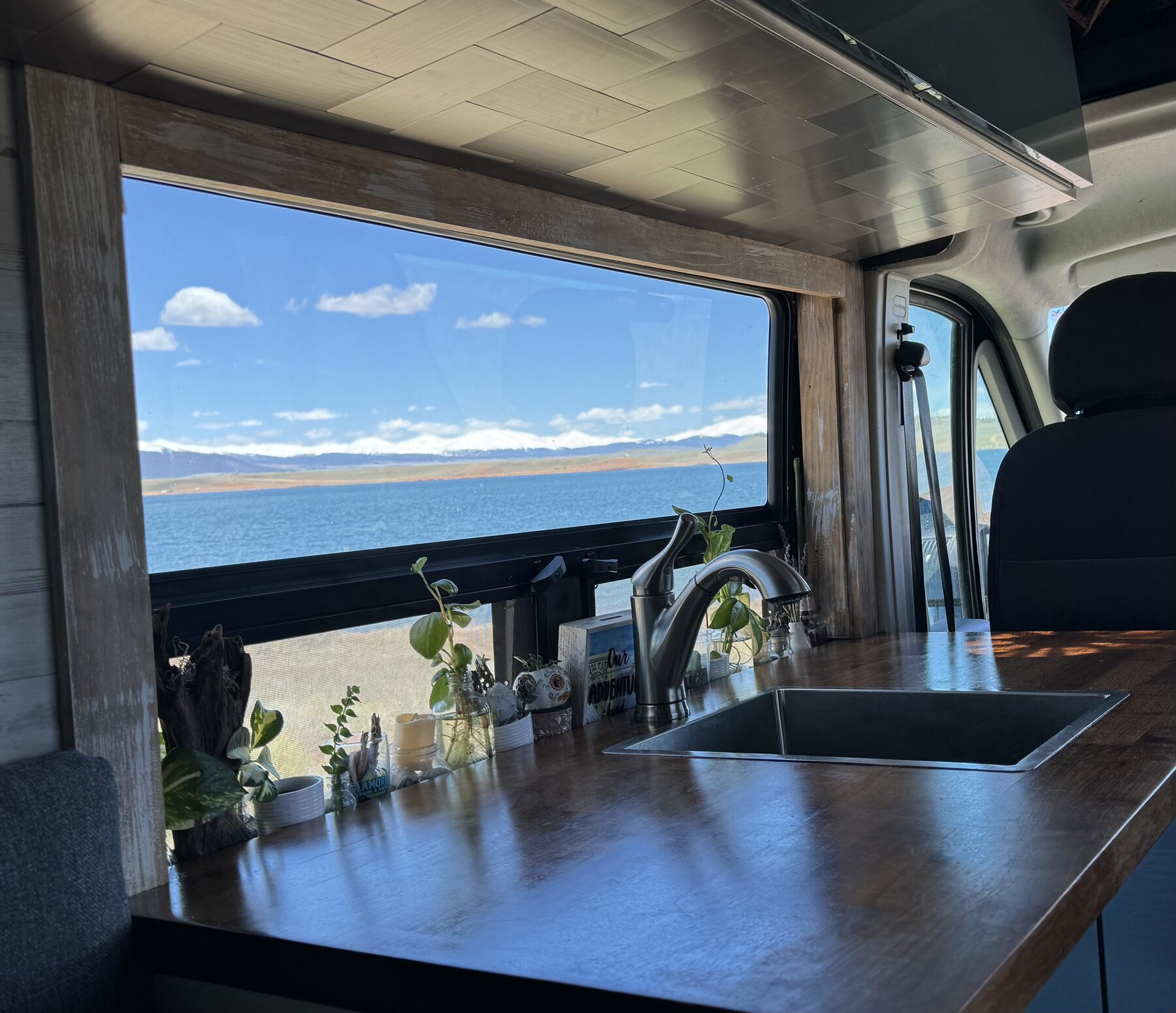
People ask us what it’s like to live in a van and we never quite know where to start. So let us just tell you what’s in front of us right now.
Our kitchen is three steps from our bed. Our living room is our bedroom is our office. Everything we own is within arm’s reach, and we mean that literally. There’s no spare room, no junk drawer that becomes a junk cabinet that becomes a junk closet. There is just the space, and what we’ve chosen to put in it.
Seventy square feet sounds small until you realize how much of a larger home you never actually use. The formal dining room that only comes out at holidays. The guest bedroom that’s really just storage with a bed in it. The garage full of things you forgot you owned.
We don’t have any of that. What we have instead is a home that we know completely: every corner, every cabinet, every inch of it. And after eight years, that intimacy with a small space feels less like a limitation and more like clarity.
The closet situation
Let’s start with the one that gets me the most, and I say this as someone who loves clothes.
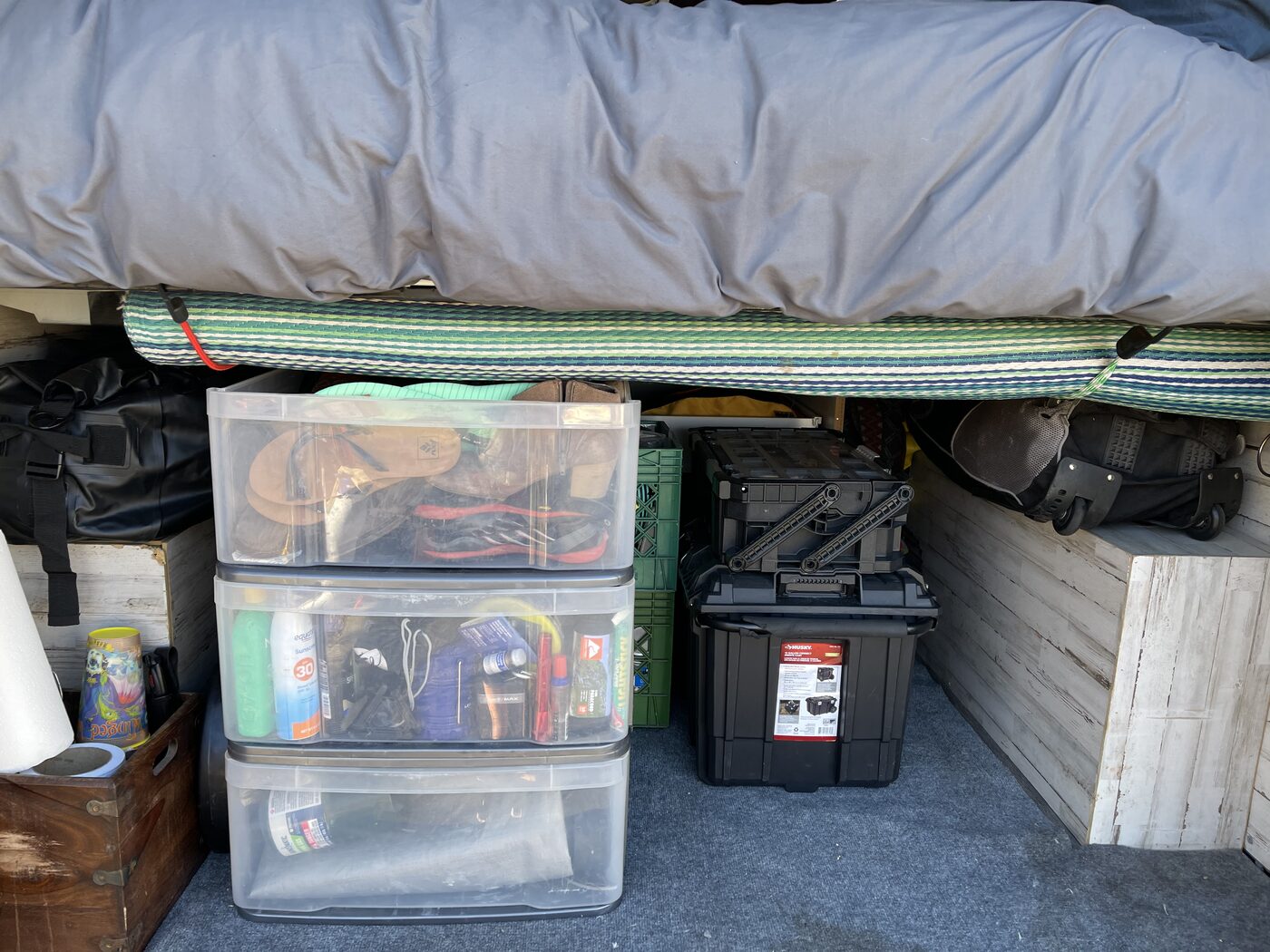
You cannot just go shopping in a van. Well, you can. But if something comes in, something has to go out. That’s not a philosophy, it’s physics. There is a fixed amount of space where clothes live, and when it’s full, it’s full.
What this has done, slowly and without us noticing at first, is completely change how we think about what we actually want. We don’t impulse buy anymore, not because we’re disciplined, but because we have to mean it. Every piece has to earn its place. Does it work hard? Does it work with everything else we have? Do we actually love it, or do we just like it in the store?
We love it. We mean it. It comes home with us.
And then there are the boots.
I have a beautiful pair of knee-high leather boots that go absolutely everywhere I go. Jesse makes fun of me for them. They are impractical, they are heavy, they take up space I don’t technically have. But some things you just can’t trade off. I found a little hidden spot in the back of the van (my secret stash) where they live. They don’t come out often. But when they do, they were worth every inch.
Van life makes you choose. But it also teaches you what’s actually worth choosing.
Eight years of free electricity
We haven’t paid an electric bill in eight years.
Let that sit for a second. Our solar panels power everything: lights, fans, charging, the fridge, the whole operation. We’ve had a handful of cloudy stretches where we had to run the generator and wall charge, but those are the exception. The rule is free, clean, silent power from the roof of our home.
We can’t calculate exactly what we’ve saved, but it’s thousands of dollars. And honestly, it’s changed how we think about energy in a way that nothing else could have. When you watch your battery percentage and know that the sun is what fills it back up, electricity stops being an abstract bill that comes at the end of the month. It becomes something real, something you think about and use a little more carefully without even trying.
Water
You think about water differently when you have to go get it.
We carry our water. We refill it. We haul it. That process alone will make you more conscious of how much you’re using than any amount of awareness campaigns ever could.
We hand wash our dishes and use almost no water doing it. Not because we’re trying to be minimal, just because when you’re the one who filled that tank and you know exactly how much is left, waste stops making sense.
The average American household uses about 80–100 gallons of water per person per day. We could not tell you the last time we came close to that in a week.

Almost everything we own fits in one vehicle
This one still gets us when we stop to think about it.
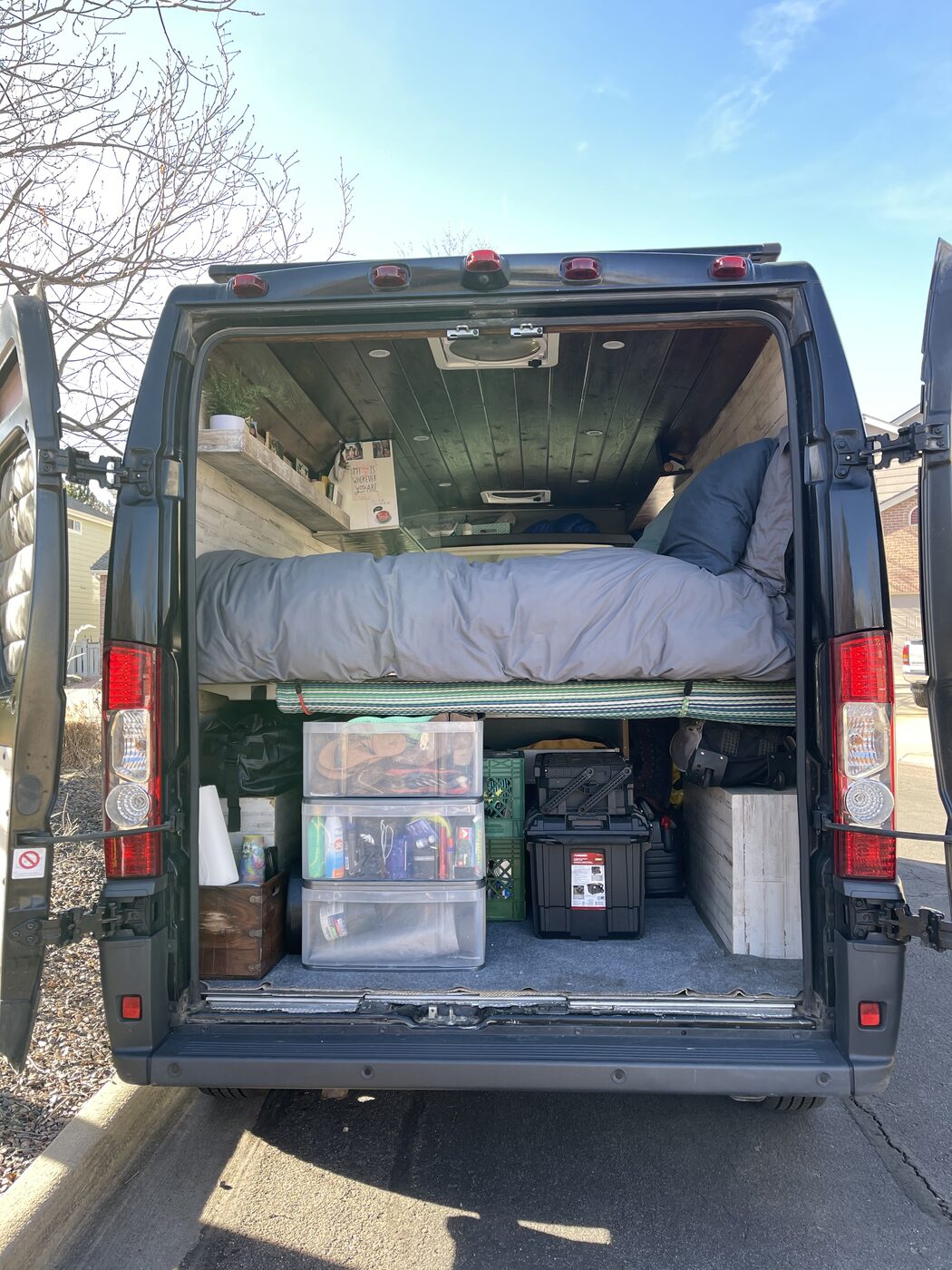
We don’t have a storage unit. We don’t have a garage. What we do have is a few boxes up in an attic: things we’ve gathered from our travels and some handmade furniture, saved for the one day we have a bigger place to put them. That’s the whole exception. Everything else, every piece of clothing, every tool, every sentimental object we decided was worth carrying, is in this van. Right now. We know where all of it is.
There’s something radical about that. Most people accumulate things faster than they can process them, and eventually they stop even seeing what they own. It becomes background noise. We can’t do that. If something comes in without purpose, it takes up space we don’t have. So things come in slowly, intentionally, and they earn their place or they don’t stay.
This is minimalism as practical reality, not as an aesthetic. And it turns out the practical version is a lot more effective than the aspirational one.
The math nobody talks about
This is what surprises people the most.
Our monthly costs (van payment, insurance that covers both our home and our vehicle, gas) have added up to less than most people pay for rent alone. That has been true since we started, eight years ago.
Think about what’s happened to rent since then. To groceries. To utilities. To the cost of just existing in a fixed place. We’ve been largely insulated from all of it because our footprint, financial and physical, was already small.
We’re not rich. We’ve never been rich. But we have had financial breathing room that most people our age are still waiting for, and it came directly from choosing a smaller life.
What actually changes
We didn’t choose van life to shrink our footprint. We chose it because we wanted to move, to see things, to not feel trapped by a lease and a commute and a life that felt like it was happening to us.
The smaller footprint came along for the ride.
But once you’ve lived this way, the old way stops making sense. Not in a judgmental way; we’re not trying to tell anyone how to live. Just personally. We can’t imagine filling a house with things we don’t need, or not thinking about where our water comes from, or not knowing exactly what we own, where it lives, and why it’s there.
The van didn’t make us better people. It just made certain things unavoidable.
And unavoidable, it turns out, is sometimes the best teacher.